

From Synapses to Scientific Integrity: Professor Südhof Highlights the Core Values of Scientific Excellence
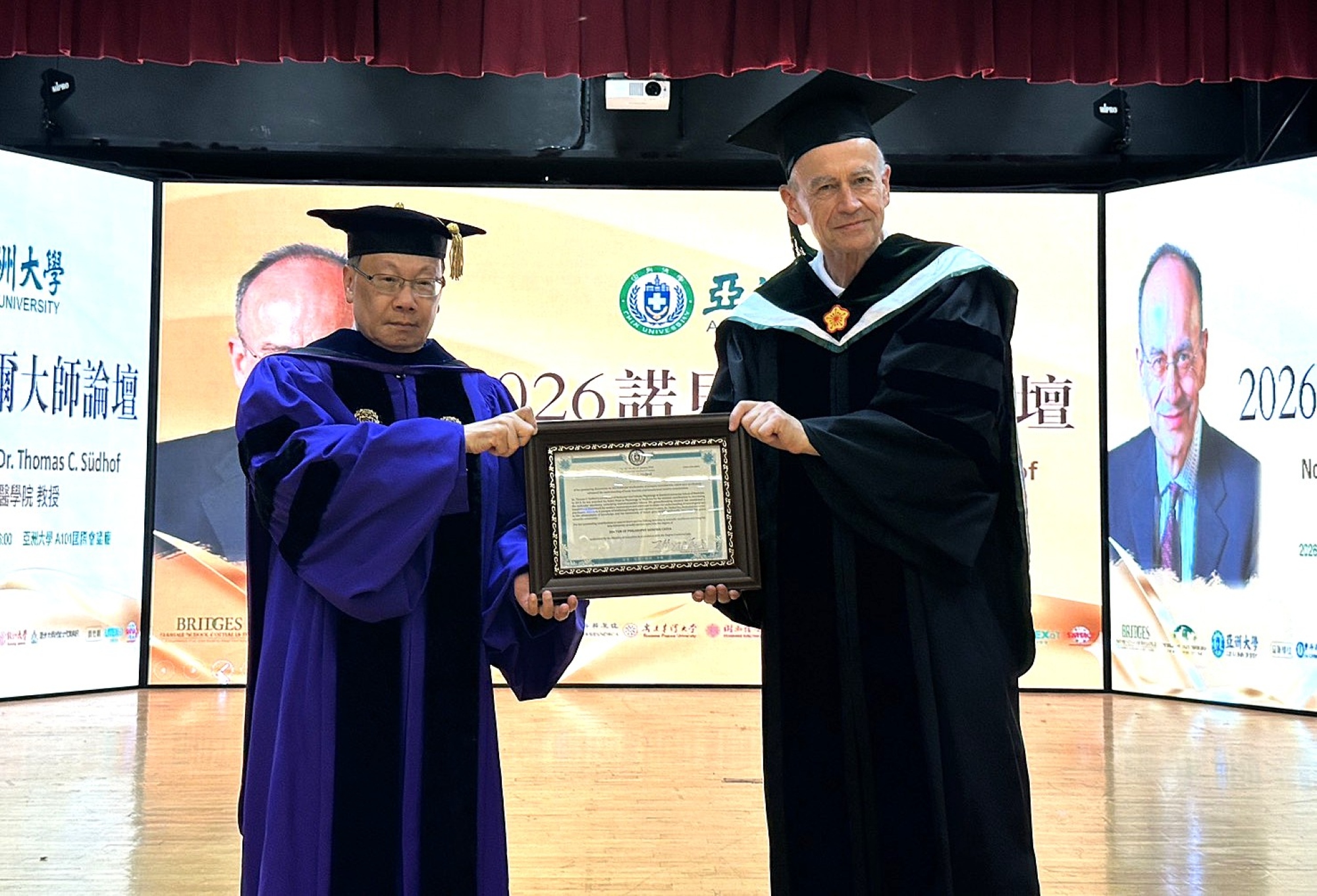
President Jeffrey J. P. Tsai formally confers the Honorary Doctorate upon Professor Thomas C. Südhof
Asia University proudly celebrated its landmark 25th anniversary on January 5, 2026, with an extraordinary event featuring a Nobel Laureate Master Forum and an Honorary Doctorate Conferment Ceremony. This prestigious occasion honored the remarkable achievements of Professor Thomas C. Südhof, 2013 Nobel Prize recipient in Physiology or Medicine and esteemed professor at the Stanford University School of Medicine.
The honorary doctorate was conferred in recognition of his groundbreaking contributions to neuroscience, particularly his pioneering research on synaptic transmission, as well as his profound impact on global scientific development. The event exemplified the university's commitment to academic excellence and innovation, inspiring future generations of scholars and leaders.
The event was jointly organized by Asia University, the International Peace Foundation (IPF), and the Taiwan Bridges Program, attracting a large audience of university faculty, students, and high school students from Taipei. The forum venue was at full capacity, with participants showing strong interest in Professor Südhof’s research journey and academic insights. The vibrant Q&A session mirrored the lively scholarly atmosphere on campus.
Asia University President Jeffrey J. P. Tsai noted that Professor Südhof’s lifelong dedication to uncovering the molecular mechanisms governing synaptic transmission has laid a critical foundation for modern neuroscience and opened new directions for understanding and treating neurodegenerative diseases. President Tsai emphasized that the conferral of the honorary doctorate not only recognizes Professor Südhof’s exceptional academic achievements, but also presents a powerful role model for students to pursue excellence while upholding academic integrity.
Unraveling Synaptic Mechanisms and the Molecular Logic of the Brain
In his keynote lecture, titled “Scientific Excellence and Scientific Integrity: A Personal Journey,” Professor Südhof shared insights from decades of research. He explained that synapses are the brain’s most fundamental computational units, characterized by remarkable speed, precision, and plasticity, and that neural circuits form the essential basis of human cognition and behavior.
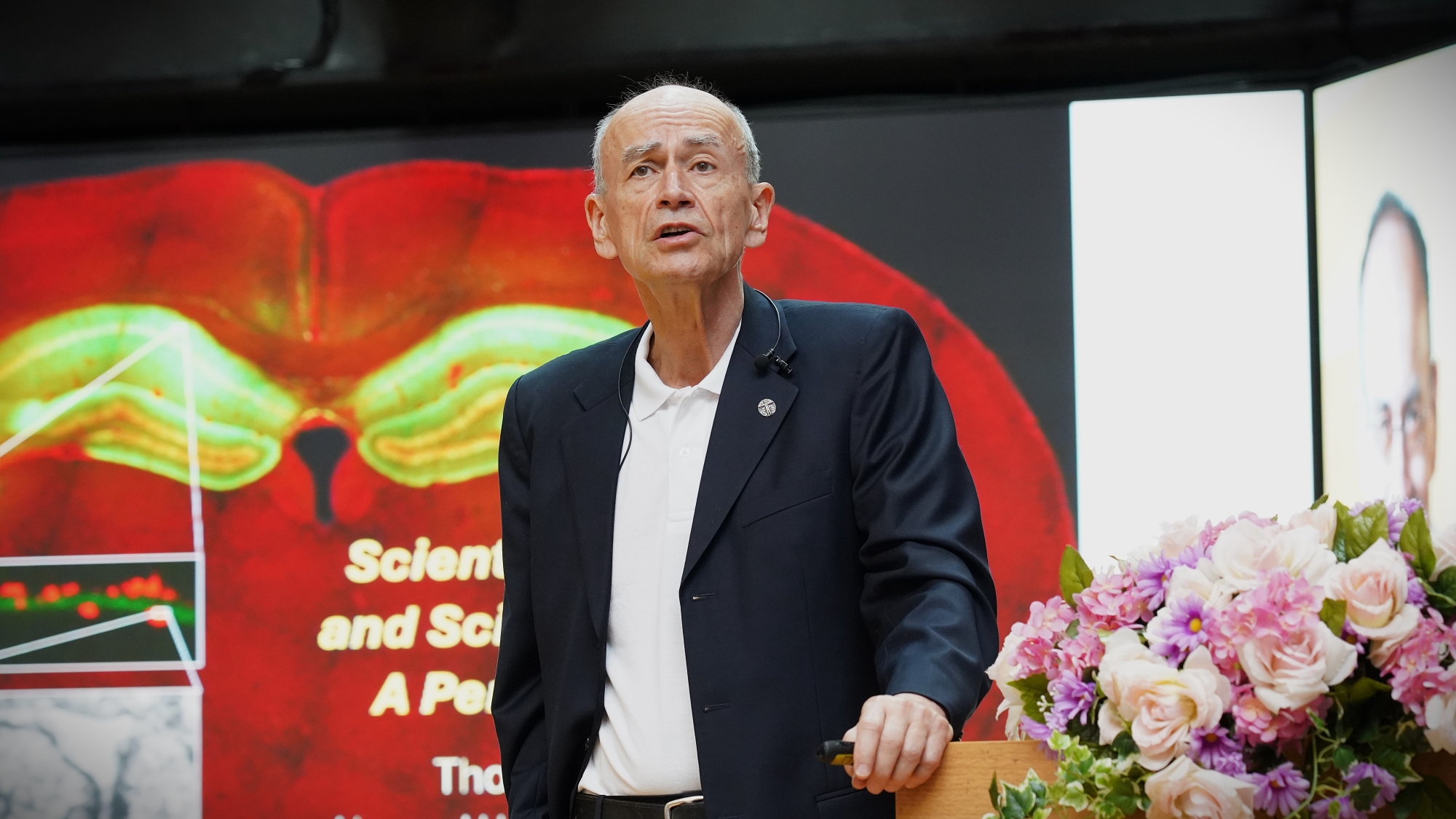
Nobel Laureate Südhof shares perspectives on scientific integrity and honest engagement with data
Professor Südhof elaborated on his research focus on how calcium ions (Ca²⁺) trigger precise neurotransmitter release at presynaptic terminals, ensuring rapid and reliable neural communication. These discoveries have provided crucial theoretical foundations for understanding neurological and neurodegenerative disorders.
Engaged Dialogue: Students Explore AI and Academic Integrity
The forum's interactive session sparked vibrant engagement, as students passionately posed questions about the transformative effects of artificial intelligence on research and academic integrity. They also delved into pressing challenges in scholarly publishing and the vital pathways for career development among aspiring researchers, highlighting their eagerness to address the evolving landscape of academia.
Addressing the rapid rise of AI technologies, Professor Südhof emphasized that while AI can serve as a powerful tool for organizing information and improving research efficiency, it can also be misused to generate false data. He cautioned students that AI should support, rather than replace, critical thinking and original research, and that overreliance may ultimately hinder academic and professional growth.
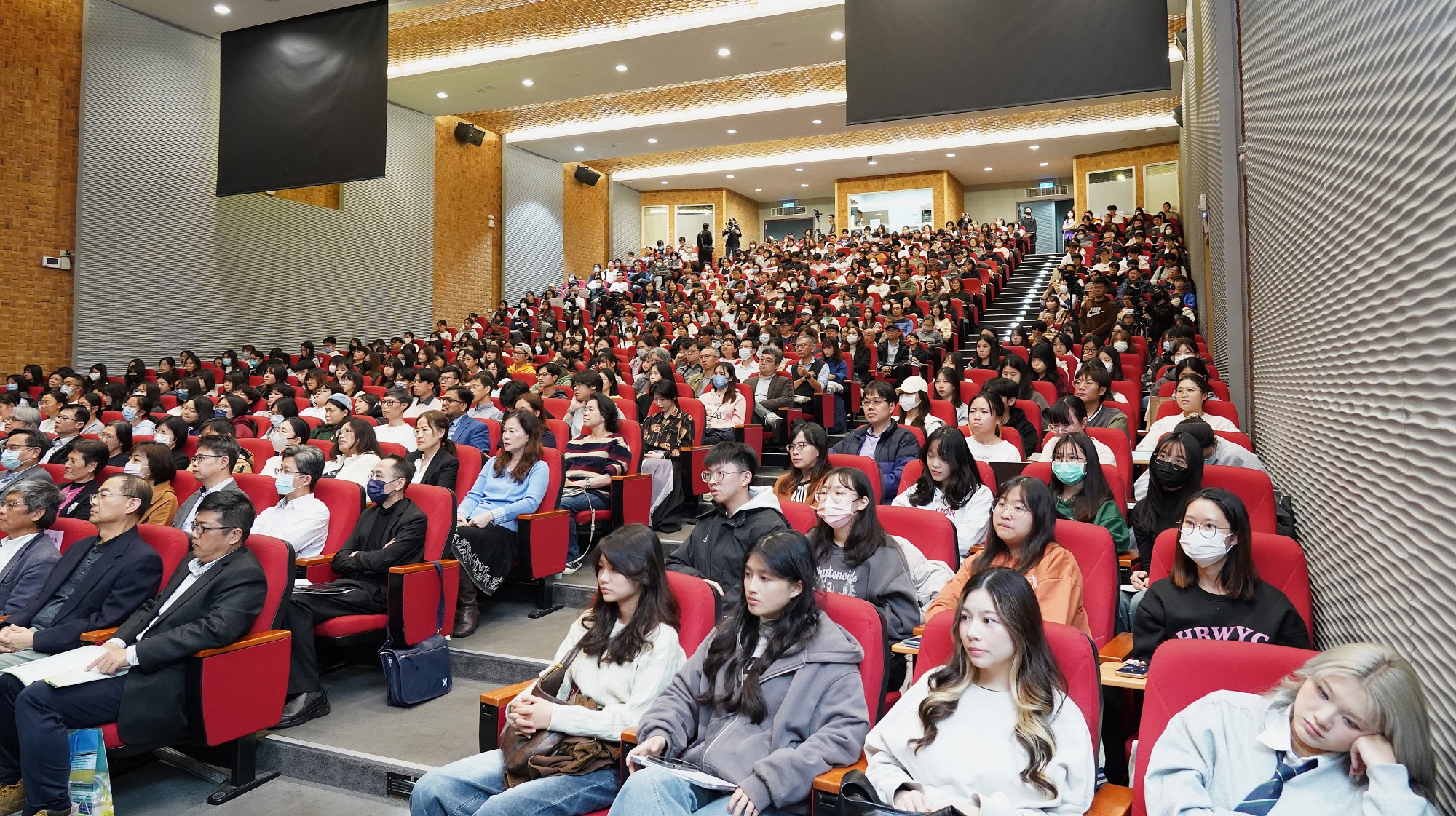
Professor Südhof explains the molecular logic of synaptic function to a captivated audience
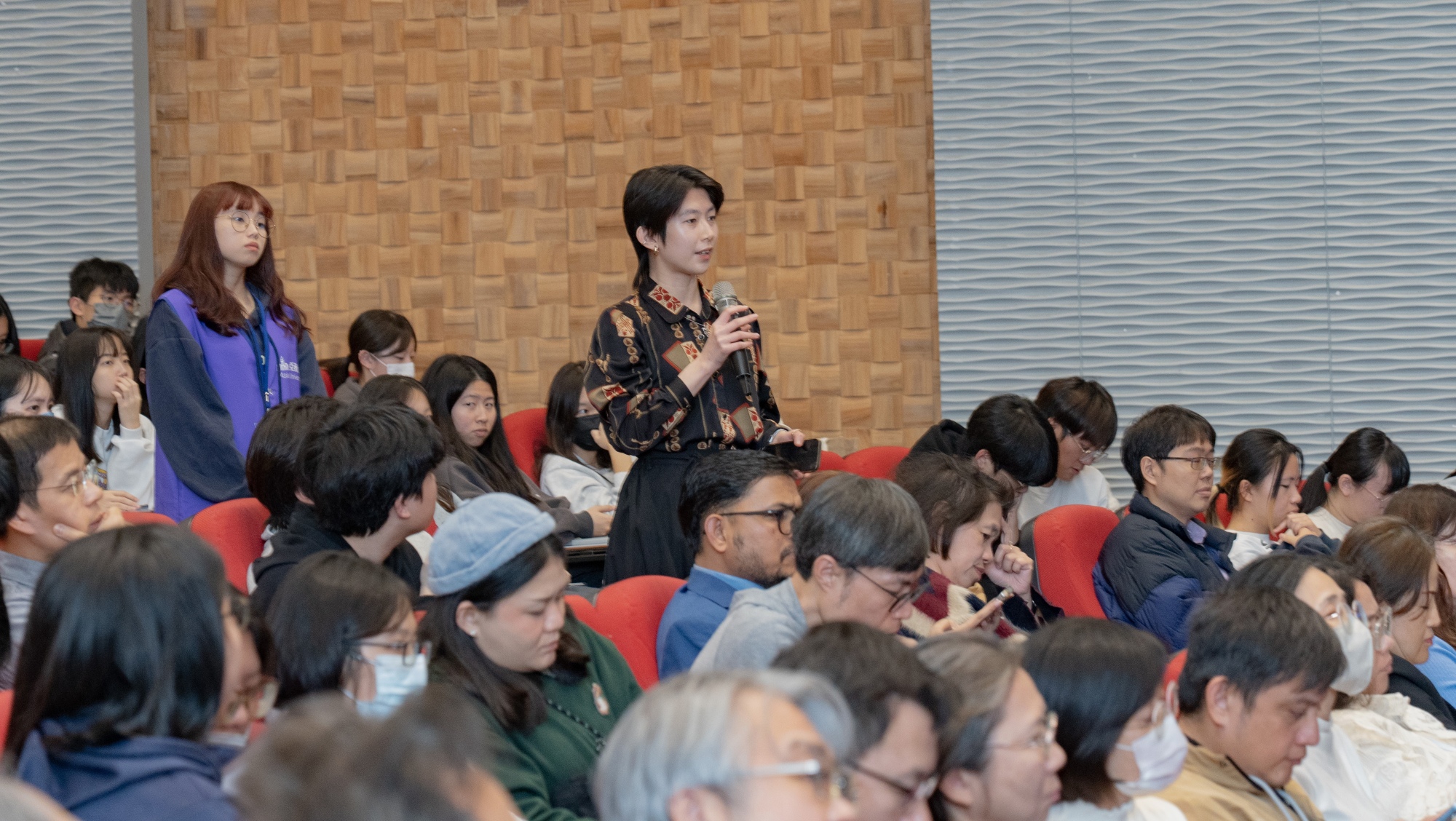
Asia University students actively engage in dialogue with the Nobel Laureate
Regarding concerns about research integrity and reproducibility, Professor Südhof observed that many errors stem from human oversight in an increasingly digital research environment rather than widespread misconduct. He also emphasized the ongoing need to improve the academic publishing system, particularly by enhancing professionalism and transparency in the peer review process.
Sharing an Academic Journey and Encouraging the Next Generation
When responding to questions about career planning and research setbacks, Professor Südhof shared personal experiences, emphasizing the importance of choosing good mentors and building a solid disciplinary foundation. He encouraged young scholars to develop deep expertise in a chosen field while cultivating interdisciplinary perspectives to navigate the rapidly evolving research landscape.
He also acknowledged that setbacks are inevitable in academic life, noting that reconnecting with the original purpose of contributing meaningfully to society can motivate one to persevere.
A Milestone Year and Continued Commitment to Global Engagement
The forum concluded with a panel discussion moderated by President Jeffrey J. P. Tsai, joined by Academician Mien-Chie Hung of Academia Sinica and Professor Susan Hu, Dean of the College of Health Sciences at Asia University. President Tsai remarked that welcoming a Nobel Laureate and conferring an honorary doctorate during Asia University’s 25th anniversary added significant academic distinction to the celebration. He reaffirmed the university’s commitment to expanding international scholarly exchange and cultivating future talent with both professional expertise and a strong sense of social responsibility.
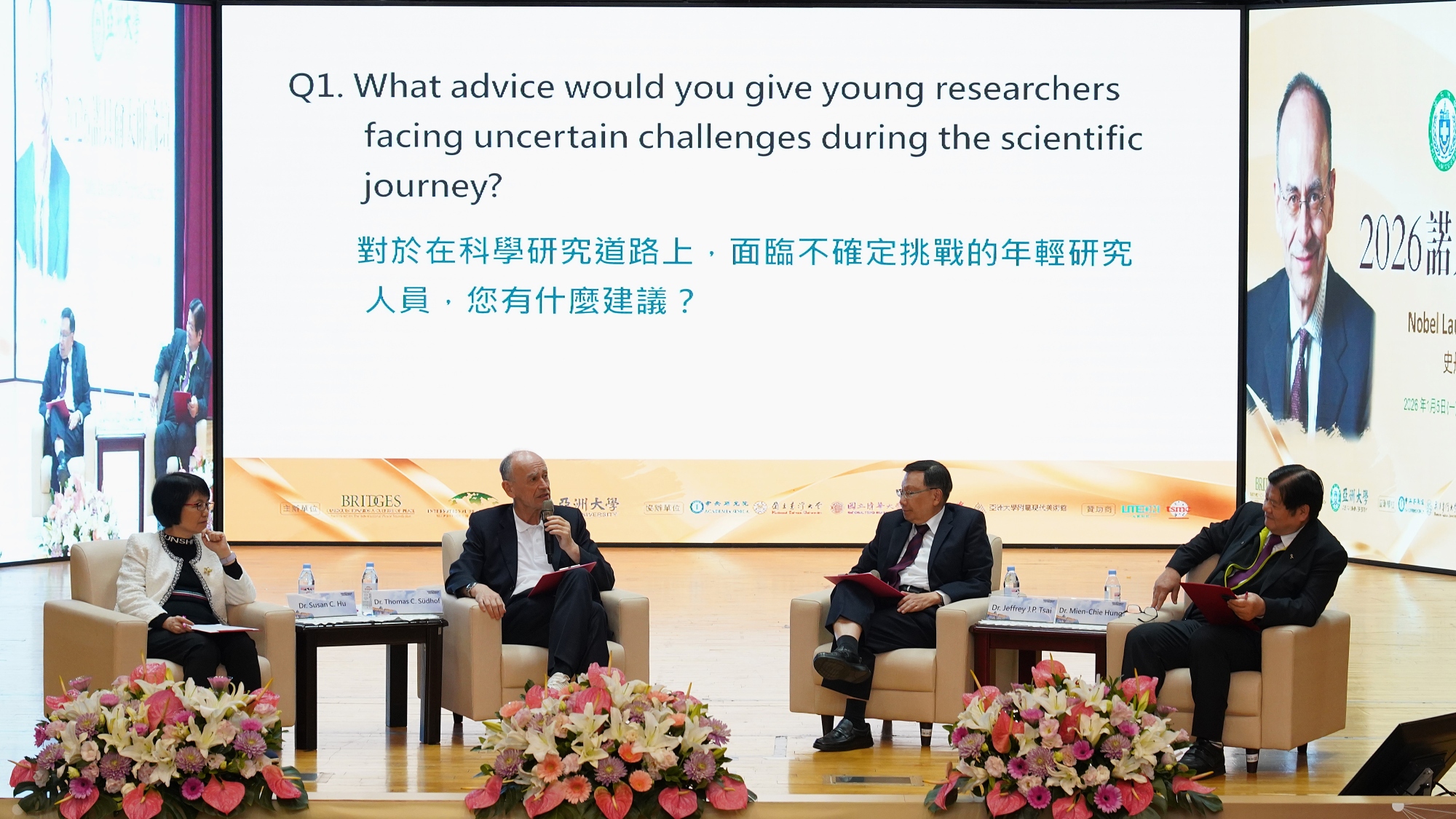
President Tsai moderates the panel discussion on challenges facing young researchers
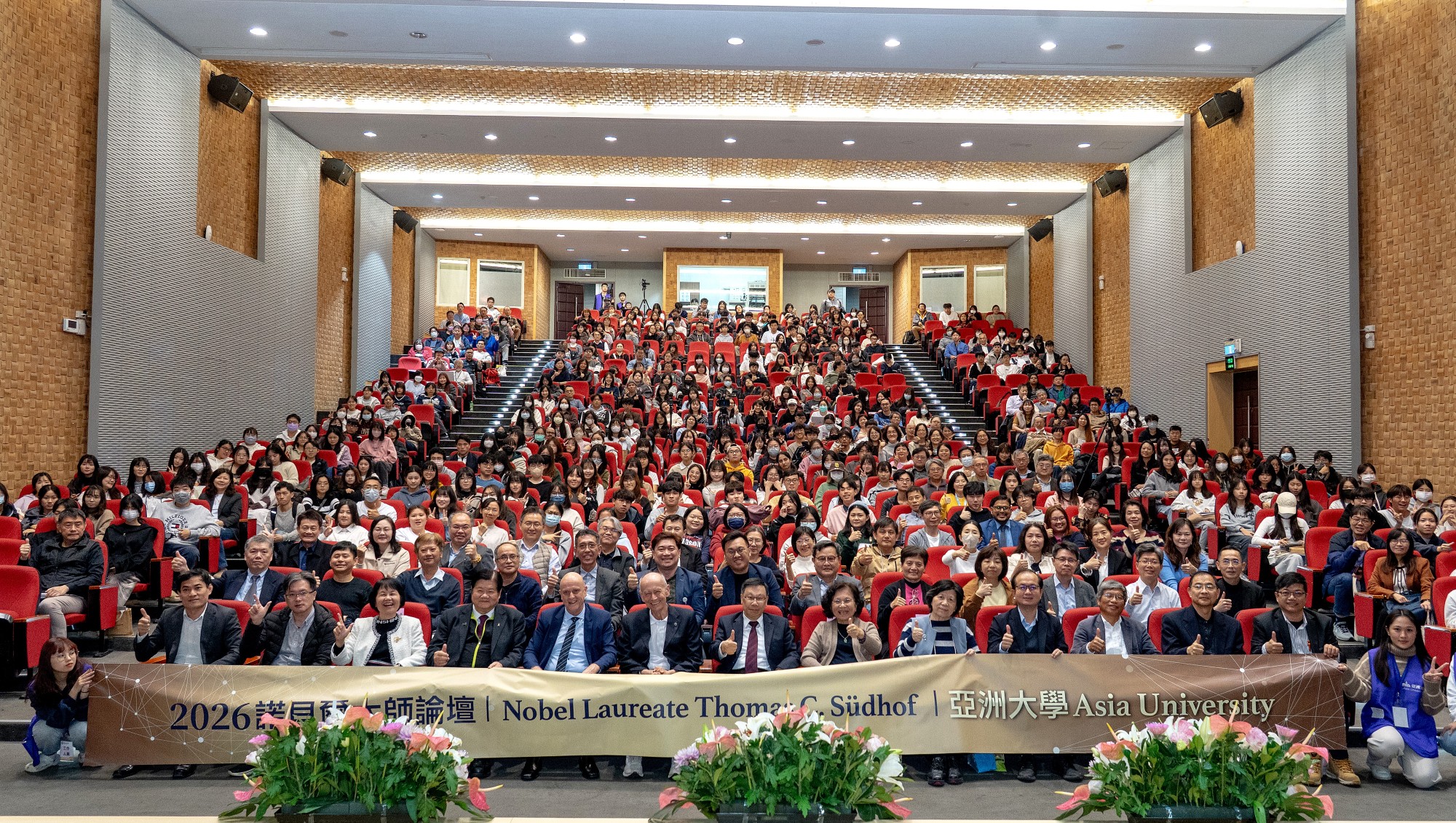
The 2026 Nobel Laureate Master Forum concludes with a group photo of Professor Südhof and attendees