

Unpacking Global Institutions and the Foundations of Economic Prosperity. President Jeffrey J.P. Tsai: Cultivating a Global Perspective to Navigate a Changing World
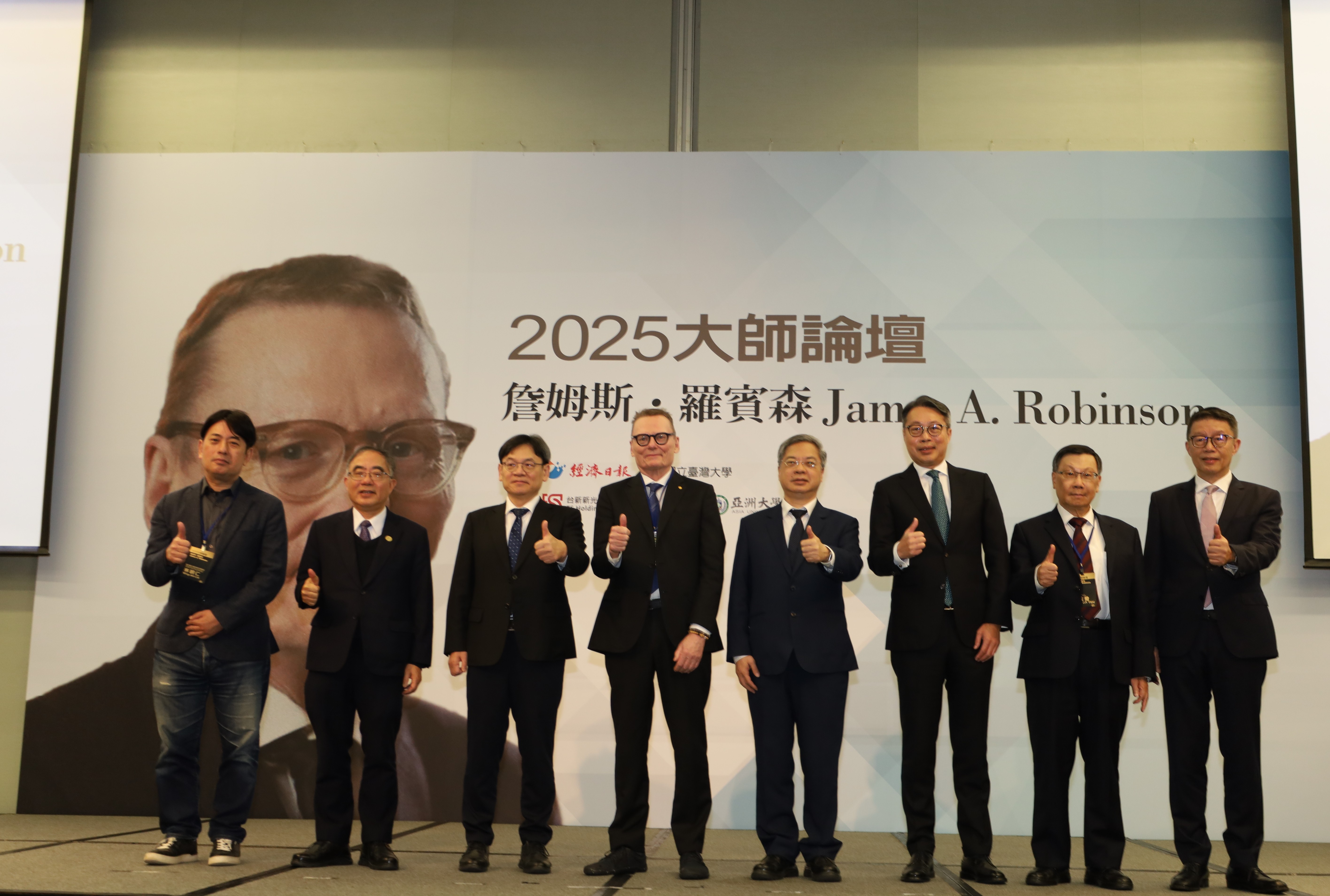
Asia University President Jeffrey J.P. Tsai (right, second) attends the Nobel Master Forum and poses for a group photo with Nobel laureate James A. Robinson (left, fourth) and distinguished guests
James A. Robinson, recipient of the 2024 Nobel Prize in Economic Sciences, met with faculty and students at Asia University on the 16th for an in-depth academic dialogue. Since launching the Nobel Master Forum in 2010, Asia University has invited 19 Nobel laureates from fields including economics, medicine, and chemistry to campus, creating rare opportunities for close interaction between world-class scholars and students. Participants described the experience of engaging directly with a Nobel laureate as both inspiring and unforgettable, offering first-hand exposure to profound ideas and intellectual rigor while exploring global economic transformations and the future of labor in the AI era.
Invited to Taiwan for the 2025 Nobel Master Forum, Professor Robinson delivered a keynote lecture titled “National Institutions and Economic Growth.” Led by Asia University President Jeffrey J.P. Tsai, more than 30 faculty members and students took part in this annual intellectual gathering and engaged in face-to-face discussions with Professor Robinson. Drawing on his global economic forecasts and theories of national development, students from Taiwan, Indonesia, India, Mongolia, Eswatini, and Vietnam—together with senior high school students from Asia University’s strategic partner schools, Changhua Girls’ Senior High School and NCHU Affiliated Senior High School—raised probing questions inspired by Why Nations Fail and The Narrow Corridor. Topics ranged from inclusive versus extractive institutions and state capacity to inequality and political transformation, reflecting the younger generation’s keen awareness of global political-economic challenges.
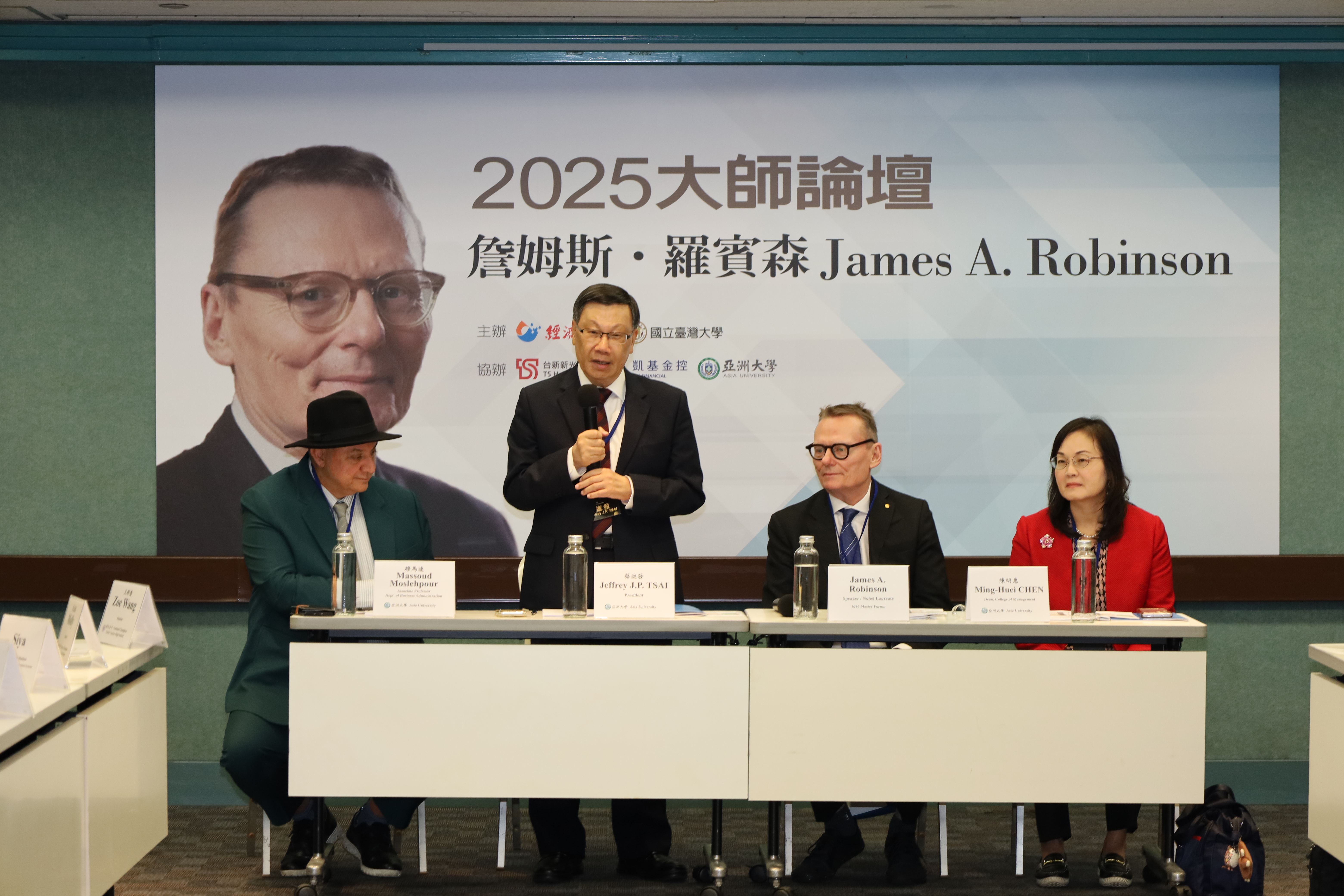
President Jeffrey J.P. Tsai (left, second) remarks that Professor Robinson’s insights help students better understand national institutional systems
President Jeffrey J.P. Tsai noted that amid geopolitical tensions and global supply-chain restructuring, Taiwan should continue to leverage the strengths of an inclusive society, pursue transformation and upgrading, and seek opportunities within global uncertainty. He emphasized that the founding vision of the Nobel Master Forum was to enable students to learn from the life stories and research journeys of world-class scholars—witnessing their passion for knowledge, perseverance through long-term inquiry, and courage in the face of adversity. He added that Professor Robinson’s lecture was especially relevant to contemporary realities, offering a thought-provoking examination of how social institutions shape national prosperity and how societies can advance transformation and upgrading.
President Jeffrey J.P. Tsai further highlighted that since 2010, Asia University has hosted Nobel laureates across economics, medicine, and chemistry—an exceptional achievement among private universities in Taiwan. This tradition allows students to encounter global academic leaders without going abroad, significantly broadening their scholarly horizons. He stressed that Asia University’s internationalization is not limited to curriculum design or foreign-language proficiency, but centers on nurturing students with global vision, cross-cultural communication skills, and critical thinking. Through dialogue with Professor Robinson, students gained insight into the pursuit of knowledge and the resilience required to confront challenges.
Following his keynote address, Professor Robinson engaged in an extensive Q&A session with faculty and students in a lively atmosphere. Ankita, a doctoral student from India, asked how scholars can connect global institutional theories with firm-level or local realities. Professor Robinson responded that applying macro-level institutional perspectives to micro-level contexts requires developing “appropriate language or operational frameworks,” stressing that while inclusive and extractive institutions offer a powerful global lens, implementation must reflect local history and culture. He cautioned against one-size-fits-all approaches promoted by organizations such as the IMF and the World Bank.
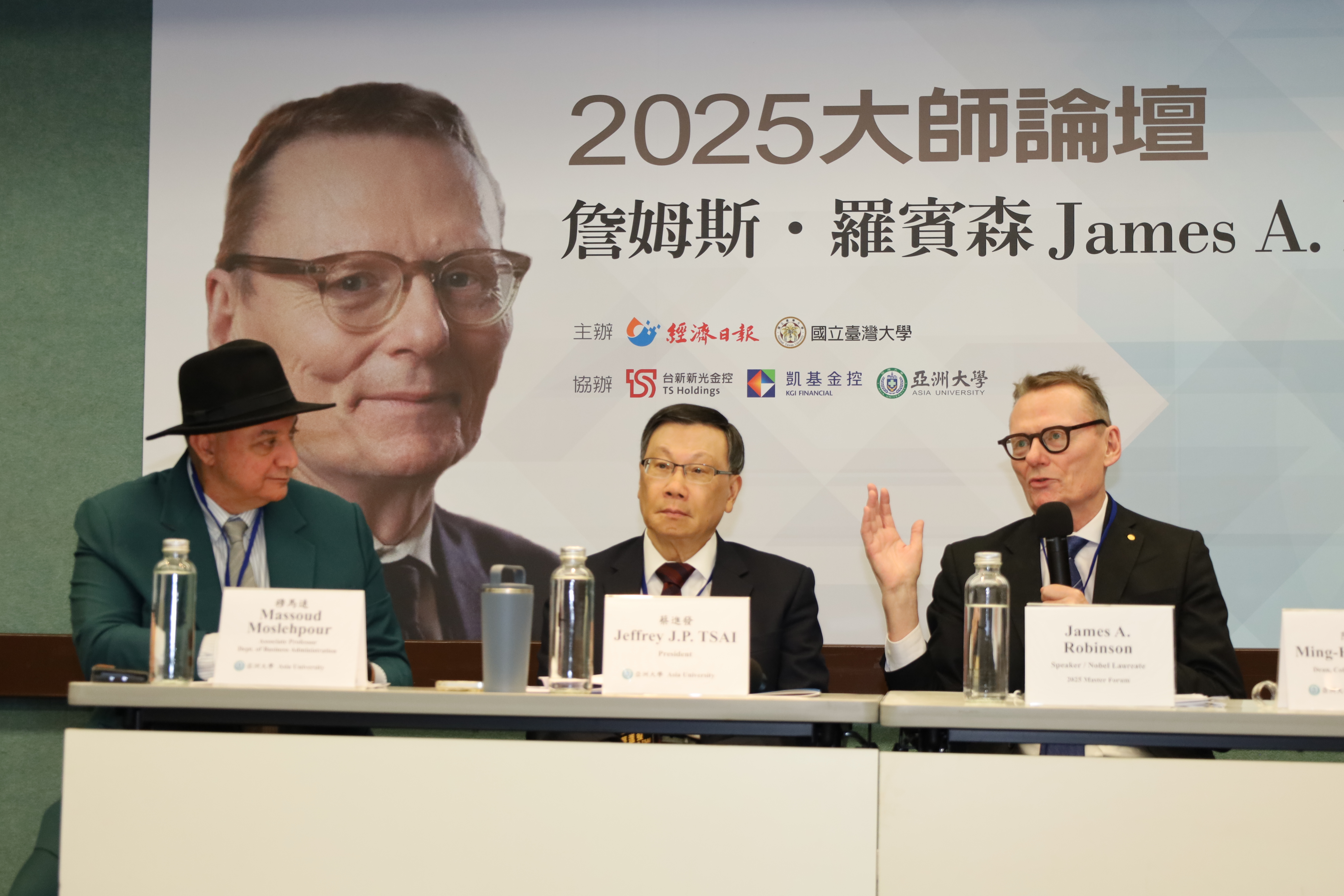
Nobel laureate James A. Robinson responds in detail to students’ questions
Elaborating further, Professor Robinson emphasized the importance of strengthening state institutions and tax systems, citing Rwanda and South Africa as examples of countries that have drawn lessons from their own cultural and political experiences to build effective systems.
In response to a question from a student from Eswatini, Professor Robinson explained that modern state institutions do not necessarily conflict with traditional authority such as monarchies. He cited Botswana and the United Arab Emirates as examples where traditional legitimacy has been successfully integrated into modern governance.
Addressing questions on oligarchic politics, the resource curse, labor voice in the AI era, and the risks of authoritarian uses of AI, Professor Robinson described artificial intelligence as a “tectonic” force reshaping labor markets and institutions worldwide. He warned against “AIocracy,” emphasized the structural causes of inequality, and reiterated that democracy tends to outperform authoritarian systems in long-term economic development.
In his concluding remarks, Professor Robinson underscored that while economics offers general principles, successful policy implementation must be grounded in a deep understanding of a society’s specific history and culture. The Nobel Master Forum concluded amid warm applause from faculty and students.
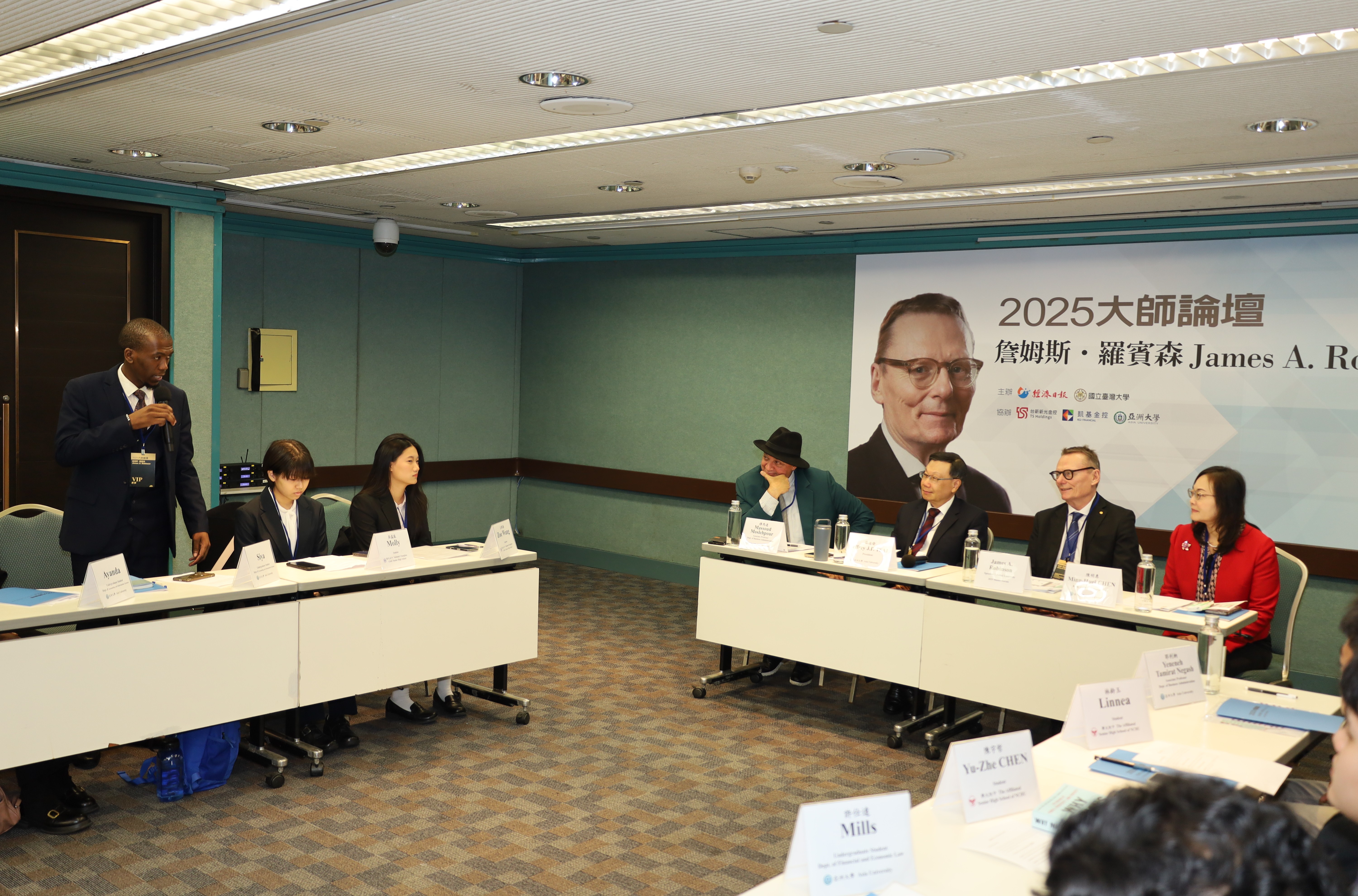
Siya, an accounting student from Eswatini at Asia University, poses a question to Professor Robinson
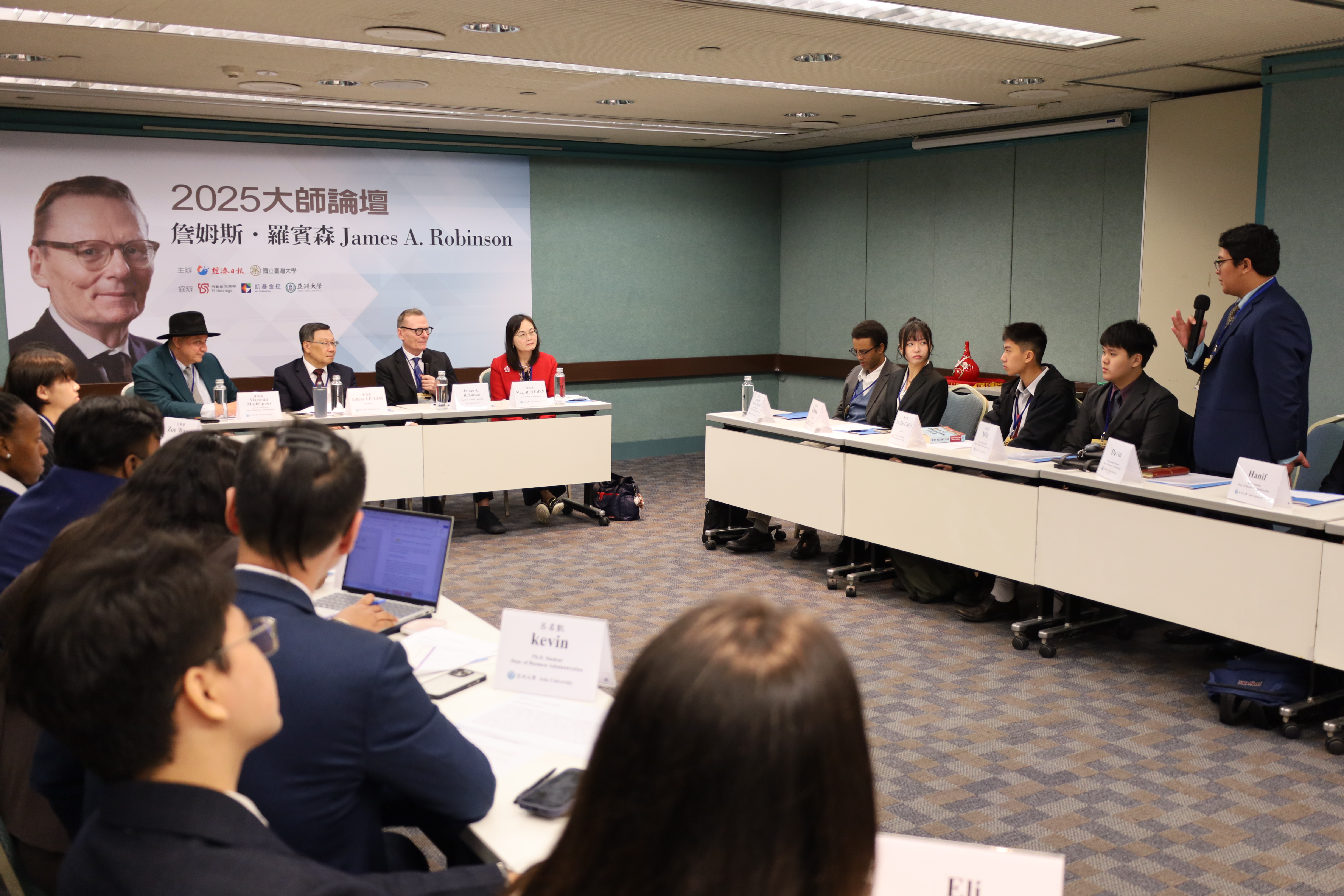
Davin, an Indonesian student from the Department of Business and Management, actively engages in the discussion
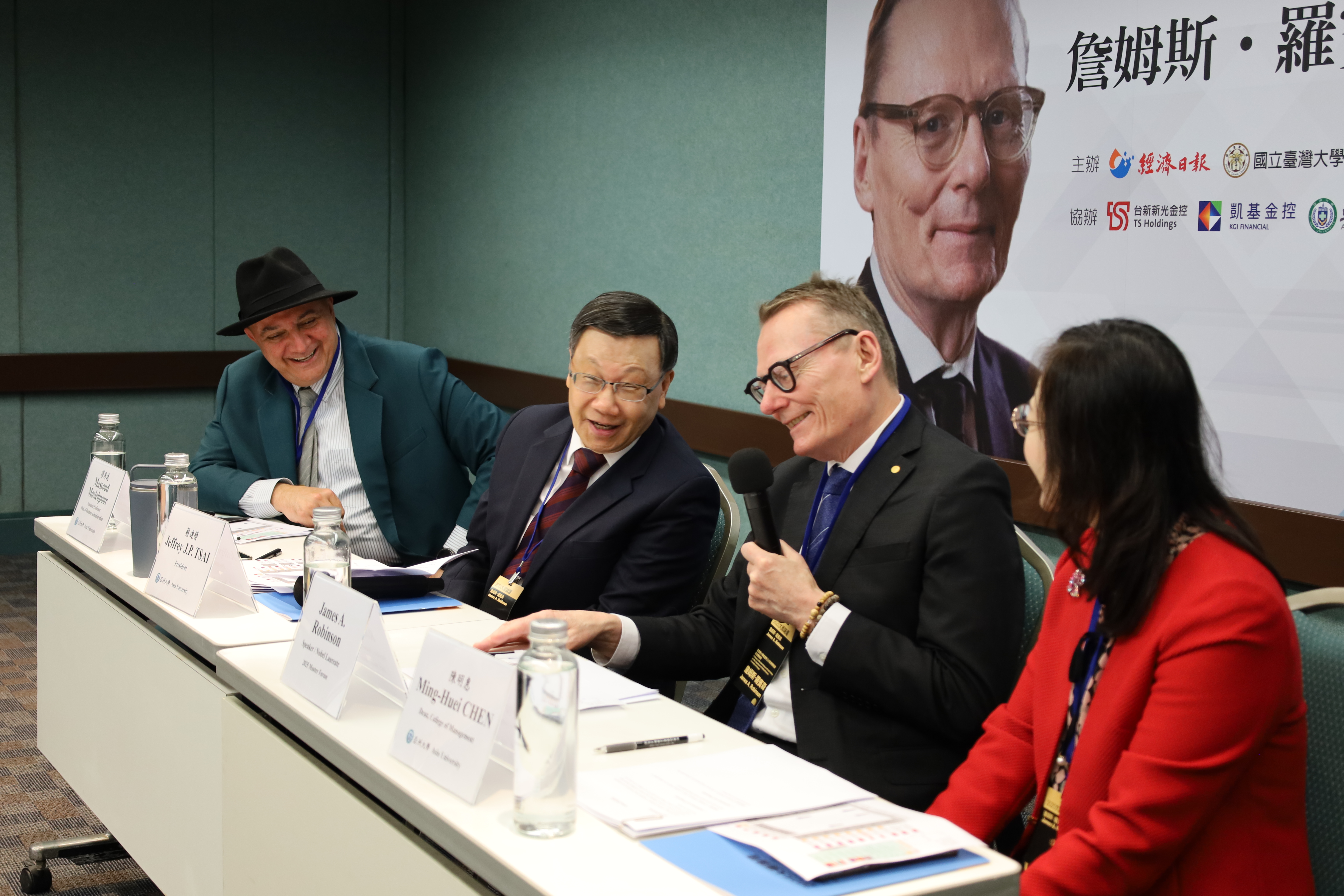
President Jeffrey J.P. Tsai and Professor Robinson had a very pleasant conversation
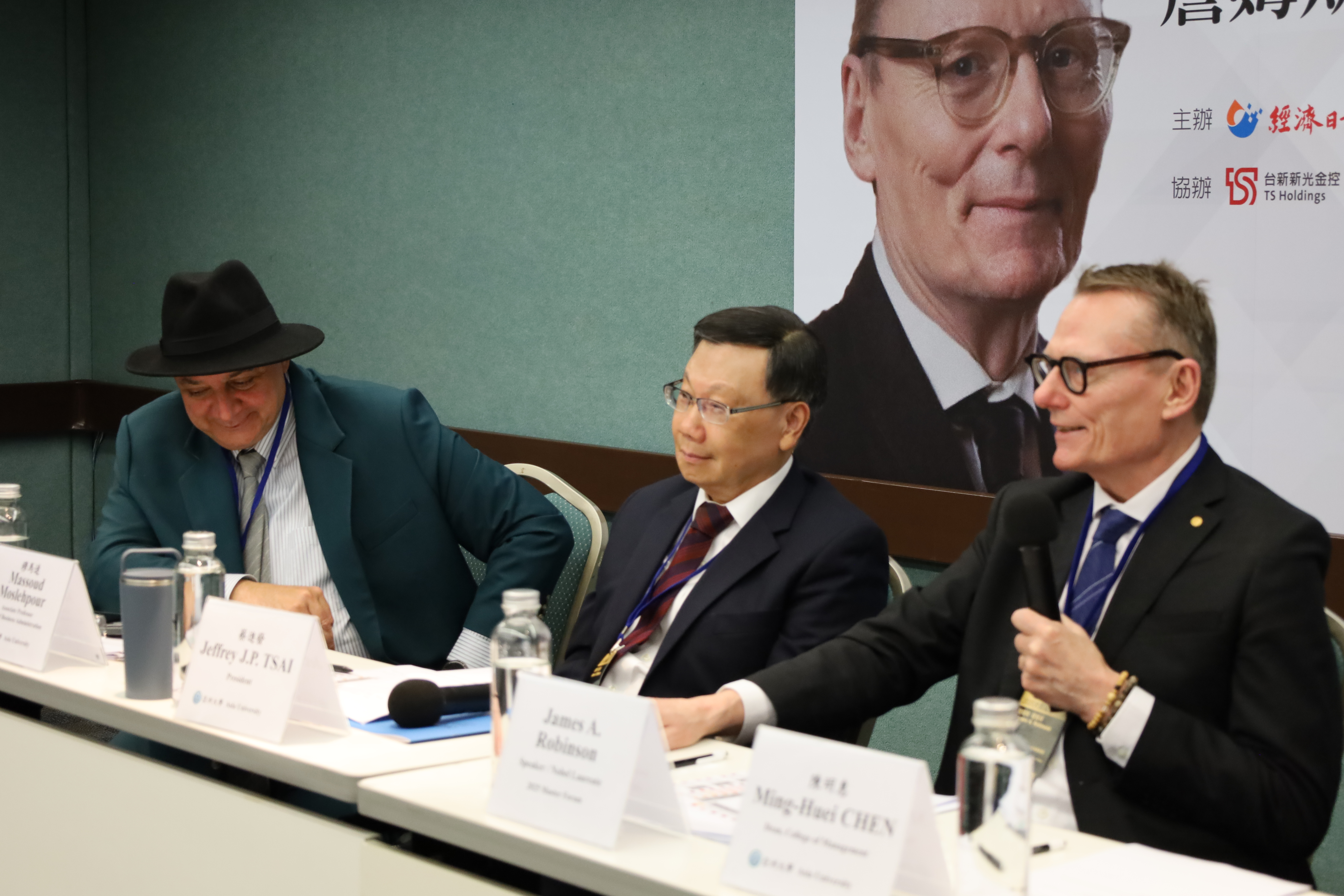
President Jeffrey J.P. Tsai and Professor Robinson attentively listen to students’ questions
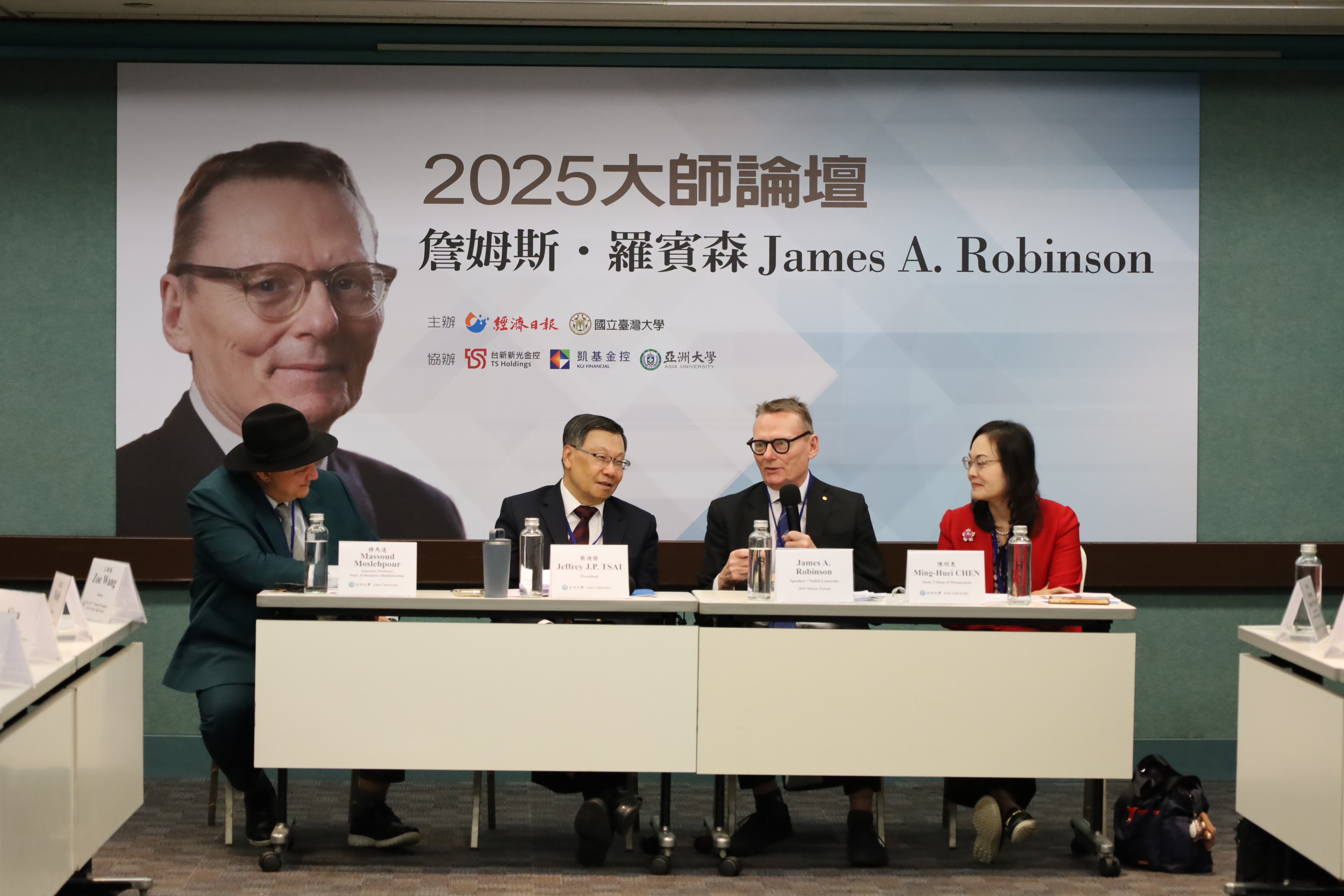
President Jeffrey J.P. Tsai and Professor Robinson exchange views during the forum
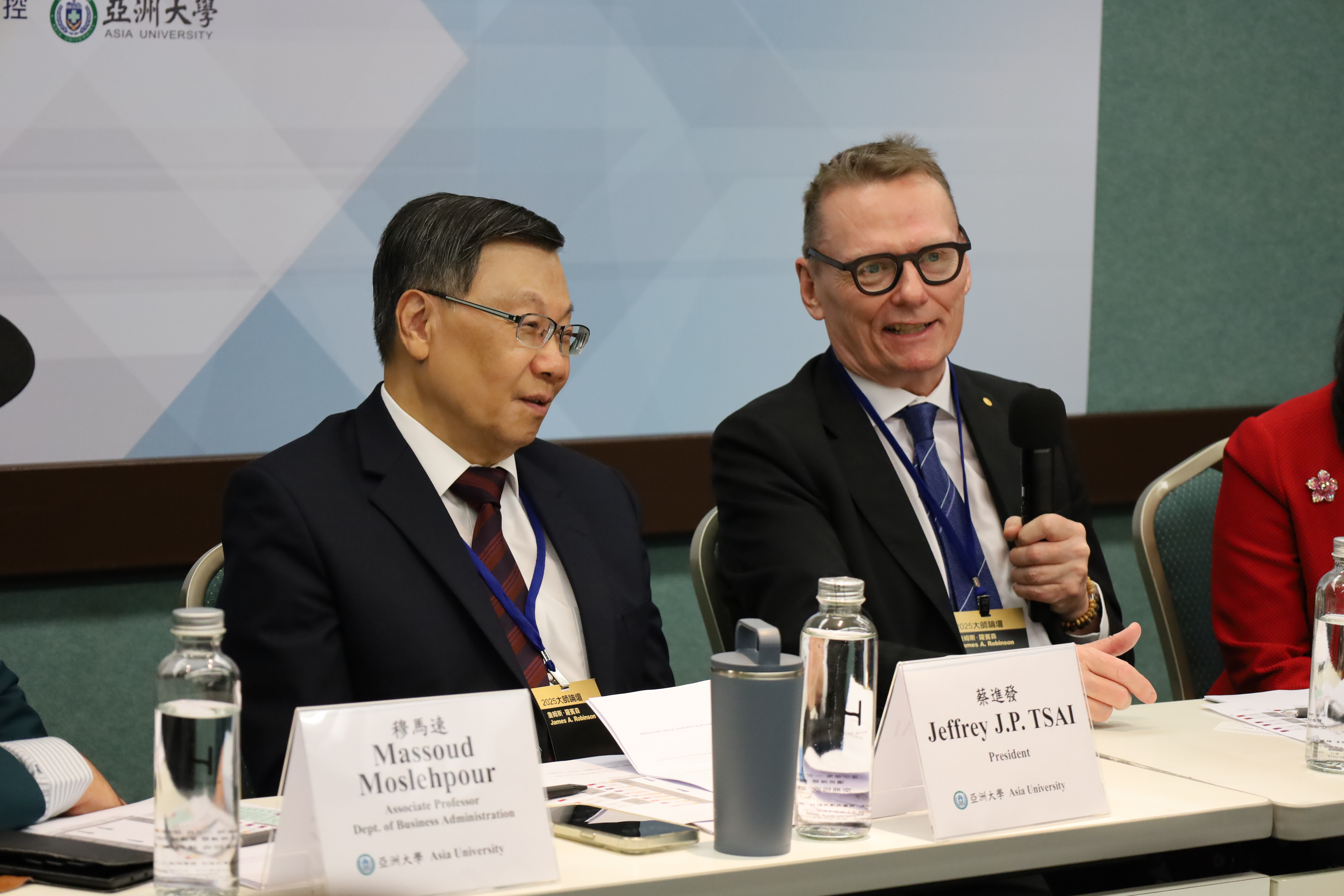
President Jeffrey J.P. Tsai and Professor Robinson discuss AI-related issues raised by students
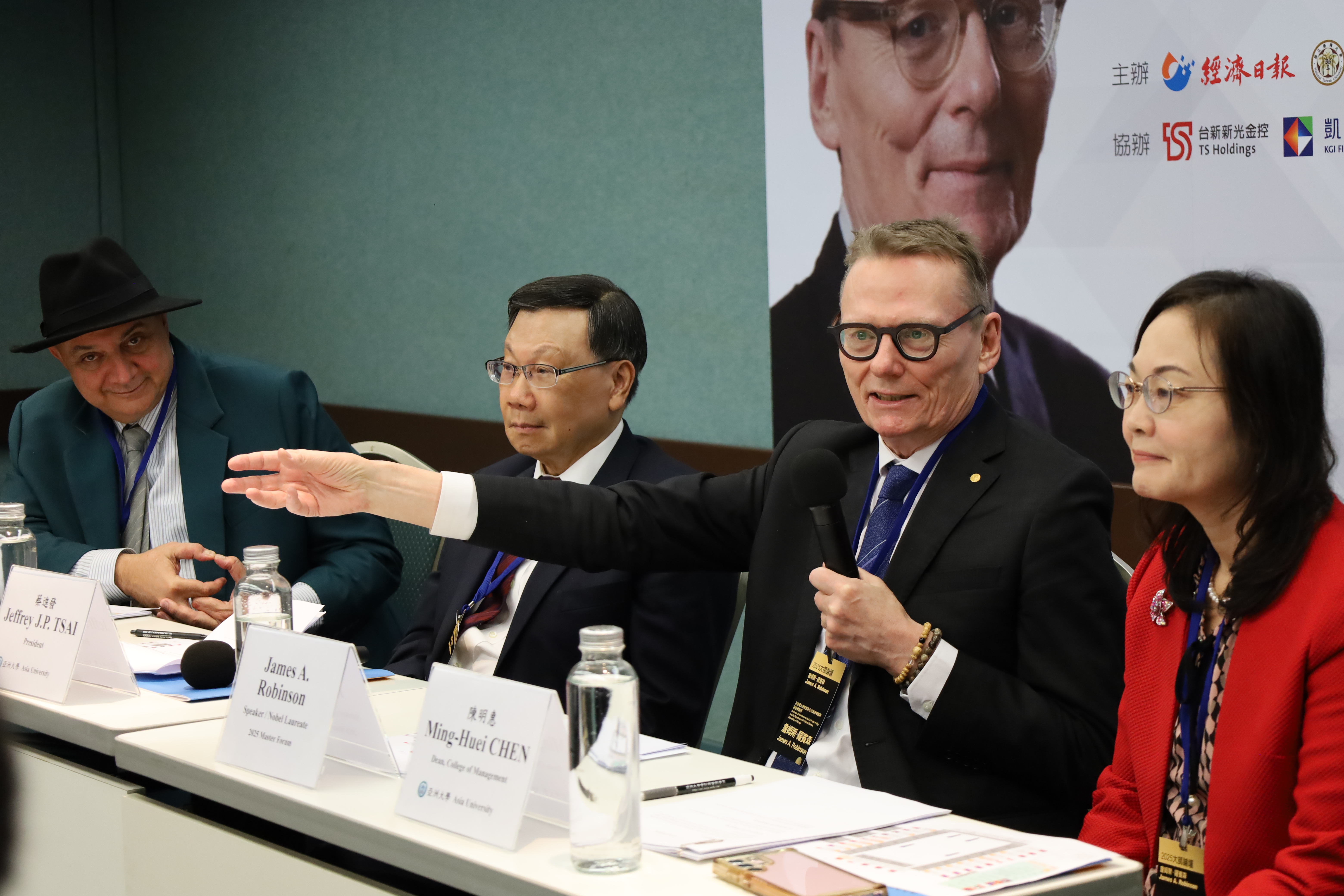
Professor Robinson shares his interest in studying global politics through a historical lens
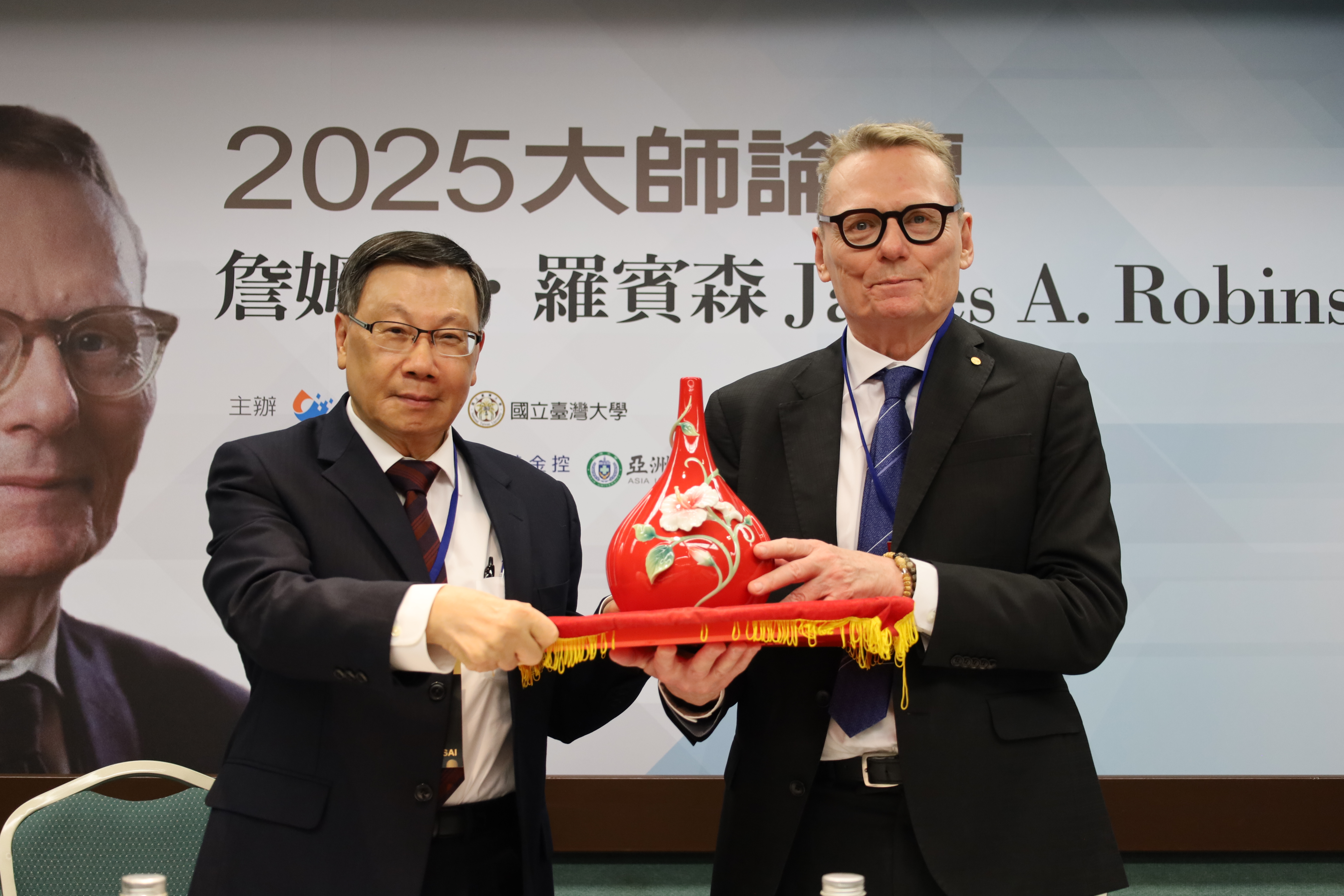
President Jeffrey J.P. Tsai presents a Franz Collection porcelain gift to Professor Robinson
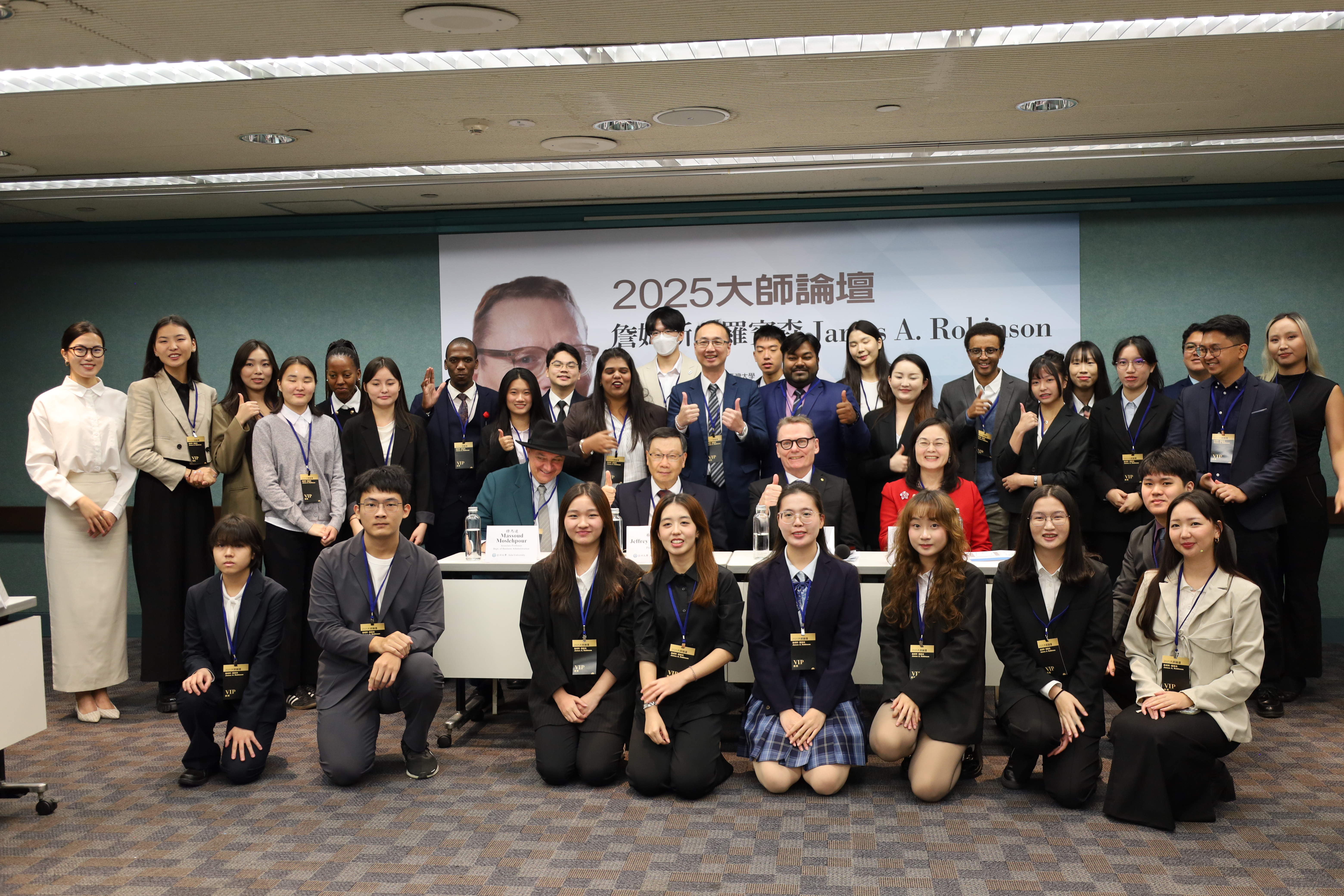
President Jeffrey J.P. Tsai and Professor Robinson pose for a group photo with participating faculty and students at the Nobel Master Forum