

Stanford Robotics Pioneer Reveals Deep-Sea Breakthroughs; Experts Caution Against Hype and "Bubble" Mentality
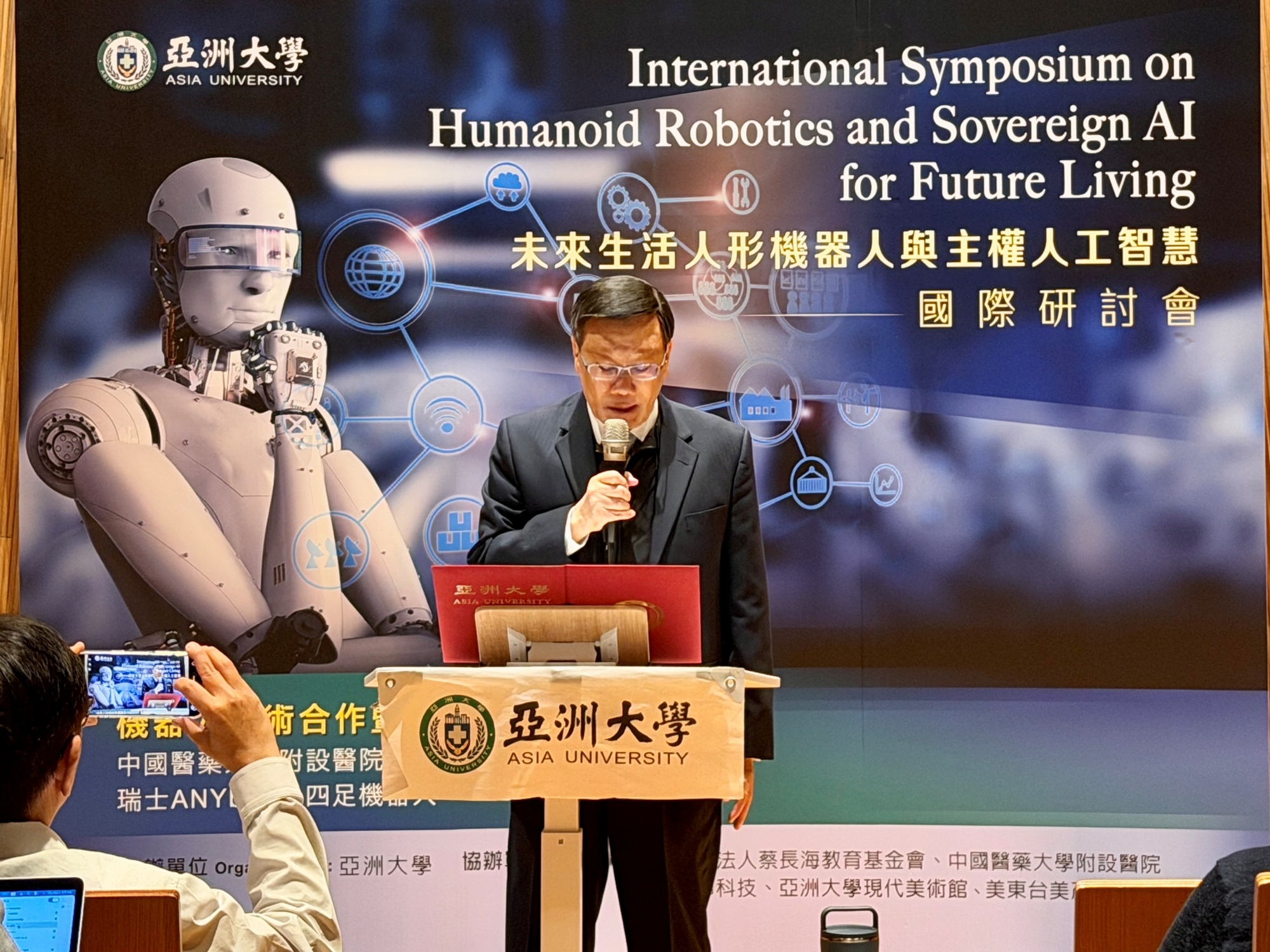
President Jeffrey J.P. Tsai delivers opening remarks, highlighting the future development and real-world deployment of humanoid robotics and sovereign AI.
Asia University held the International Symposium on Humanoid Robotics and Sovereign AI for Future Living on February 5, bringing together leading scholars and industry representatives from Taiwan and abroad to examine the key challenges of moving humanoid robotics from laboratory prototypes to reliable real-world deployment. The symposium showcased practical applications ranging from deep-sea archaeology to hospital care, while also diving into hard-core technical issues such as chip architecture, cognition models, and cybersecurity trust—underscoring that the next phase of robotics innovation will depend on both engineering excellence and responsible governance.
One of the day’s most eye-catching highlights was the live demonstration of real-world applications. The Eirbot nursing robot, co-developed by China Medical University Hospital and Everbot Technology, is already deployed in clinical settings to support patient guidance, health education interactions, and selected standardized care-assistance tasks. Another standout was ANYmal, a quadruped robot from Switzerland’s ANYbotics, which demonstrated impressive real-time environmental sensing and autonomous responses on site—showing strong potential for inspection operations and disaster-response scenarios.
As global enthusiasm around AI robotics continues to rise, participating experts expressed excitement about the pace of technical progress, while also offering pragmatic caution. Several speakers warned the field not to repeat the overinflated promises that fueled past "dot-com bubble" cycles. They emphasized that the near-term value of robotics lies in human–robot collaboration—leveraging complementary strengths—rather than pursuing full automation at any cost.
Industry–Government–Academia in Focus: Building Taiwan’s Sovereign AI and Robotics Ecosystem
Symposium Chair President Jeffrey J.P. Tsai of Asia University noted that humanoid robotics has entered a turning point. The field is expanding beyond mechanical design and algorithmic optimization toward more complex concerns, including data security, system resilience, human–robot trust, and social acceptance. Asia University aims to serve as an international platform that connects global expertise and helps Taiwan build practical experience and momentum in real-world intelligent technology deployment.
In opening remarks delivered via a pre-recorded video message, Minister Cheng-Wen Wu of the National Science and Technology Council (NSTC) emphasized that, amid intensifying challenges from population aging and declining birth rates, robotics is no longer simply an industry topic—it is becoming a cornerstone of national economic vitality. He pointed out that Taiwan is exceptionally well positioned to develop a complete smart robotics ecosystem by integrating its strengths in semiconductors, ICT, and precision machinery.
Minister Wu further outlined the government’s policy direction: prioritizing service robotics across key application domains—hospitality, healthcare, logistics, and disaster response—and advancing a systematic strategy that spans core technology R&D, standards and regulatory frameworks, and talent cultivation. The government will support startups and SMEs through co-investment mechanisms, while also building a sovereign AI ecosystem using local datasets and indigenous models. In parallel, Taiwan is investing in next-generation computing capabilities such as silicon photonics and quantum computing to ensure technological autonomy in future global competition.
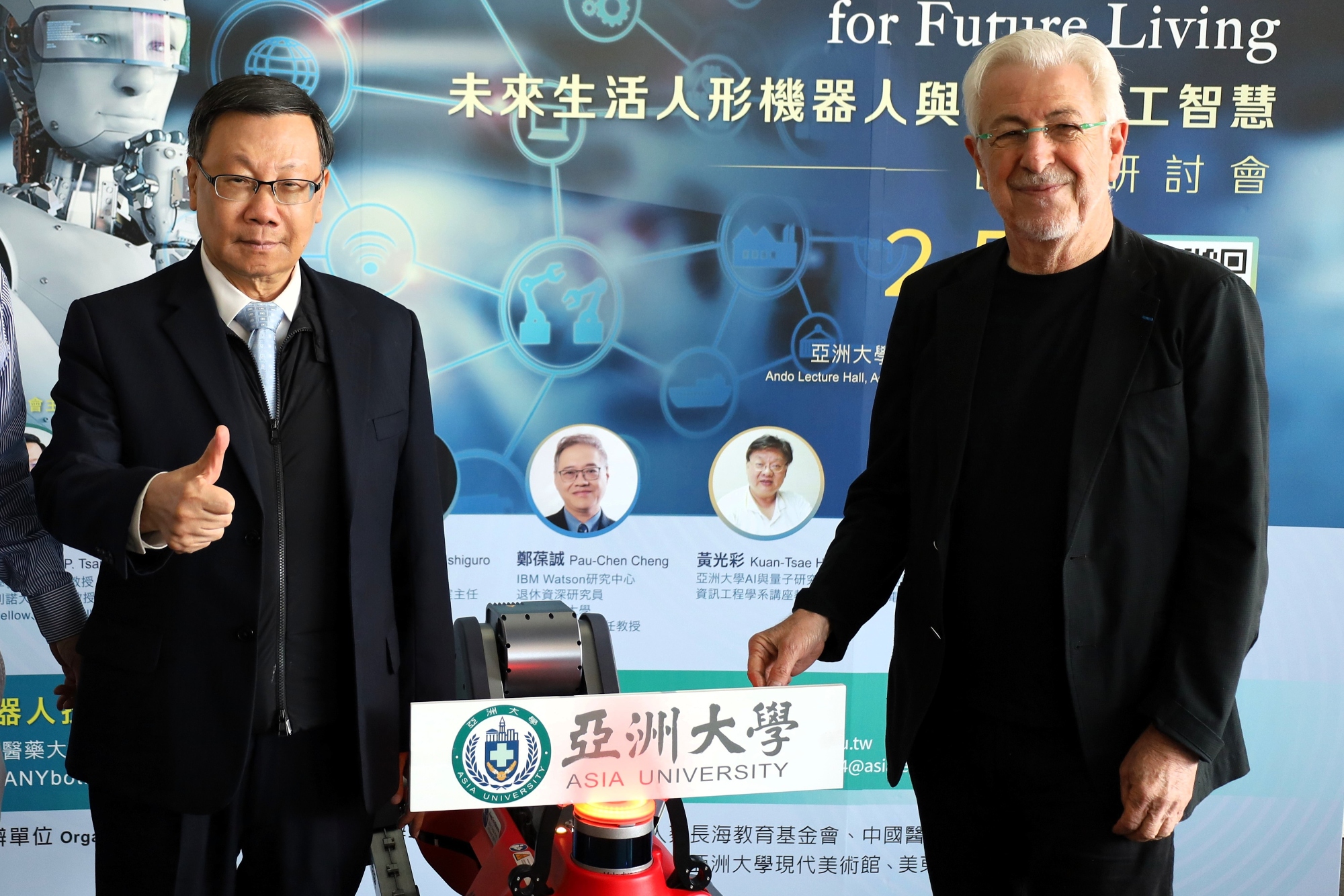
At the symposium, President Jeffrey J.P. Tsai (left) meets Stanford Robotics Center Director Oussama Khatib (right).
Stanford Expert Reveals Deep-Sea Archaeology Advances and a "Dual Autonomy" Architecture
The opening keynote was delivered by Oussama Khatib, Director of the Stanford Robotics Center, titled "Shaping the Future of Human-Robot Collaboration." He presented striking results from the humanoid underwater robotic diver OceanOneK, including successful deep-sea archaeological missions.
During both the talk and subsequent Q&A, Professor Khatib shared key technical insights. He explained that underwater environments present immense fluid resistance and extreme pressure—challenges fundamentally different from space robotics. To withstand the high pressure at depths of around 1,000 meters, the team developed a body structure using hollow glass microsphere composite materials, achieving both buoyancy and strength. For manipulation tasks, the robot’s arms were designed as oil-filled systems, allowing pressure balancing via an external compressor so that the robot can operate with both compliance and pressure resistance—critical for handling delicate artifacts.
Addressing the challenge of network latency in cross-border teleoperation, Khatib introduced an innovative "dual autonomy" architecture. Traditional feedback loops can become unstable and oscillatory under significant delay. In contrast, the dual autonomy approach establishes independent autonomy systems on both the operator side and the robot side, exchanging input commands rather than real-time state feedback, effectively mitigating latency and enabling stable, precise control across continents.
Khatib also explored the possibility of "digital immortality." He argued that merely recording a person’s voice or gestures cannot reconstruct a personality. True digital immortality would require extracting the underlying strategies and physical models by which the brain controls the body—capturing the essence of human intelligence and skills rather than surface-level behaviors.
Hiroshi Ishiguro on the Avatar Society: Enabling Participation Beyond Time and Space
In a keynote titled "Avatar and the Future Society," Hiroshi Ishiguro, Director of the Intelligent Robotics Laboratory at Osaka University, offered a forward-looking vision with philosophical depth. He emphasized that the future is not just about building smarter machines, but about using avatars—teleoperated robots and digital characters—to transcend constraints of the body, space, and time.
Ishiguro outlined an inclusive societal model in which people who must care for children or elderly family members, or those with limited mobility, could still participate in work, education, healthcare, and daily social activities through avatar technologies. In his view, the ultimate value of technology lies in building systems that enable more people to be included and to participate—and avatars provide a concrete pathway toward that future.
Edward Chang on Embodied AGI: Overcoming the "Cognitive" Bottleneck
Edward Y. Chang, Visiting Professor of Computer Science at Stanford University, presented "From Walking to Thinking: Feedback, Memory, and Causal Reasoning for Embodied AGI." He argued that while humanoid robots have made major strides in locomotion and manipulation, the most serious deployment bottlenecks are increasingly cognitive.
Chang highlighted three critical challenges: context loss in long-horizon planning, errors in internal world models, and confounded causal inference when systems draw conclusions from observational data. He stressed that improving safety and reliability cannot rely solely on curated environments or human supervision; instead, robots must be equipped with robust feedback loops that can detect and correct errors before they propagate into physical action—an essential step toward mature embodied AGI.
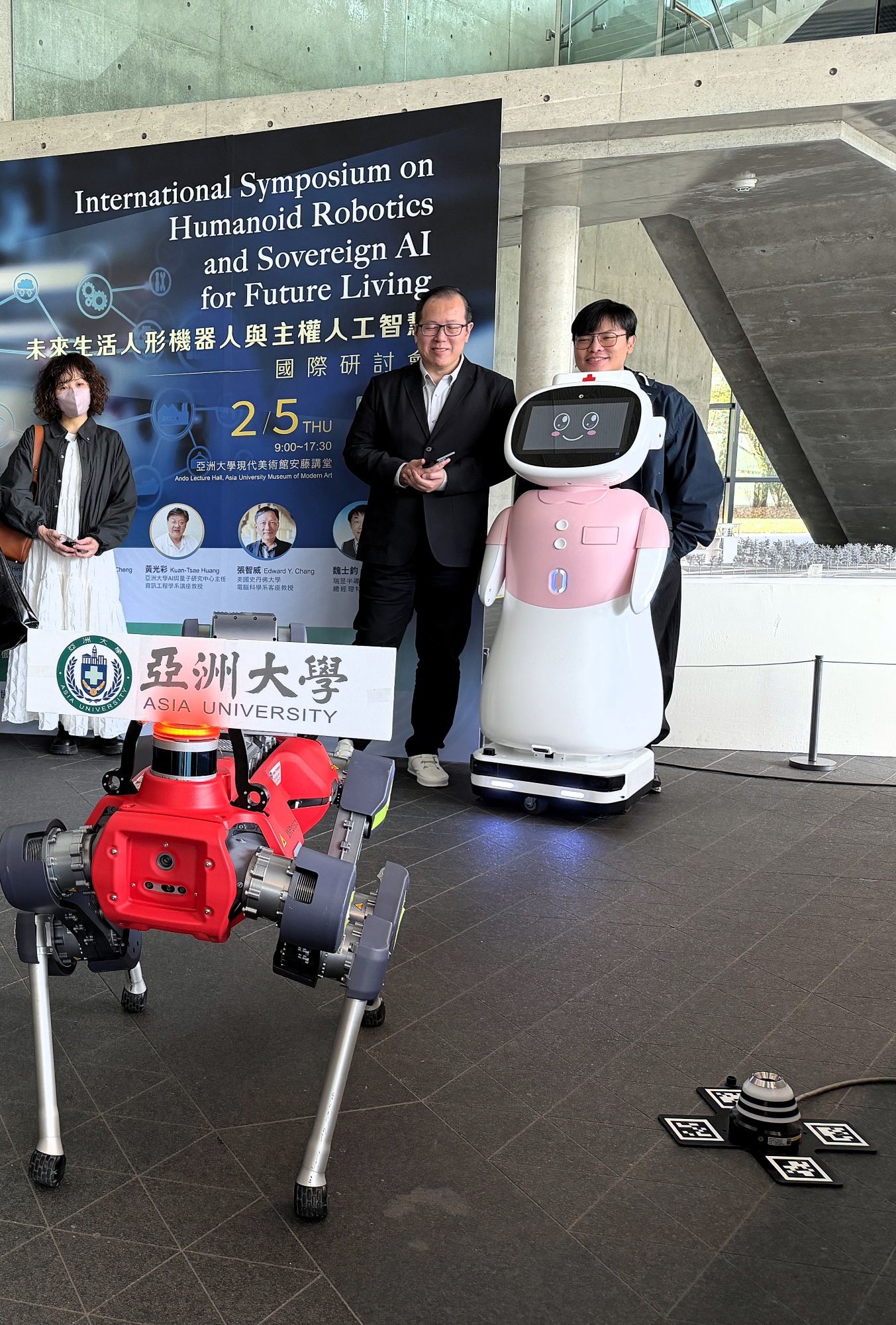
Multiple real-world robotics applications were demonstrated on site, drawing strong attention from attendees.
Realtek Perspective: Bio-Inspired "System 1" Chip Architectures for Reflex-Level Intelligence
On hardware architecture, Edward Wei, Senior Advisor at Realtek Semiconductor, proposed a forward-looking shift in how autonomy should be built at the chip level. He argued that the transition from disembodied "silicon minds" to embodied AI beings requires a fundamental rethinking of computational architecture.
Wei noted that today’s Vision-Language-Action (VLA) models often rely on expensive, high-latency, high-power "System 2" reasoning, which is not ideal for real-time robotic control. He proposed a layered dual-system approach: System 2 for high-level planning paired with System 1 for low-latency reflex control. To realize System 1, he advocated a hardware-centric paradigm—advancing IC innovations such as Computing-in-Memory (CIM), charge-domain computing, and high-density analog 3D integration—so decision modules can be embedded directly into robotic joints, motors, and even "skin," enabling ultra-low-power, ultra-low-latency reflexive intelligence.
IBM Security Warning: Building an Unbreakable Hardware Root of Trust
As robots integrate more deeply into human environments, cybersecurity risks rise in parallel. Pau-Chen Cheng, Retired Senior Research Staff Member at IBM Watson Research Center and Adjunct Professor at National Taiwan University, delivered a cautionary message: without adequate protection, humanoid robots could become launchpads for internal network attacks—or even create physical safety threats.
Cheng emphasized that "perfect security" does not exist, and the industry should adopt a resilience-first mindset: assuming attacks will happen, systems must continue operating, minimize damage, and recover quickly. He highlighted the importance of a hardware-based security foundation, including a Root of Trust, Trusted Boot, and Trusted Execution Environments (TEE) to isolate sensitive code and data at the hardware level.
Panel Discussion: Hype Warning and Cleanroom Reality Check
In the panel discussion, experts engaged in lively debate on key industry questions. On whether cleanrooms should be fully automated with robots, speakers agreed that although cleanrooms are clean, maintenance and repair scenarios are unstructured—making full automation extremely difficult and expensive. A more realistic path, they argued, is remote expert operation: deploying robots on site while human specialists perform precise teleoperation using haptic interfaces, combining human judgment with robotic physical presence.
Khatib also pointed out that while AI perception has advanced rapidly, physical robotics still faces hard constraints in control, robustness, and safety. He urged industry leaders to avoid overpromising and to steadily solve fundamental physical and engineering challenges—rather than fueling hype cycles that could lead to disappointment.
Deployment Demos: Eirbot Reduces Nurse Workload; ANYmal Supports Inspection and Disaster Response
The symposium’s application demos illustrated how robotics is already reshaping frontline work. As the world faces a projected shortage of millions of nurses by 2030, China Medical University Hospital’s Eirbot robot offered a practical response.
Everbot Technology Project Manager Wing Chow explained that Eirbot integrates voice interaction, computer vision, and navigation to support non-clinical tasks such as wayfinding, item delivery, and smart ordering services. According to figures shared on site, Eirbot is expected to reduce nurses’ walking burden by 15,000 to 20,000 steps per day, allowing healthcare professionals to focus on core clinical care. To protect patient privacy, the system uses local servers and dedicated medical models; future upgrades include adopting vision-language models (VLMs) for night rounds to detect patient falls and trigger alerts.
Meanwhile, the Swiss quadruped robot ANYmal—demonstrated by Rex Chang (張子修), General Manager of the Taiwan distributor, and his team—showed robust autonomous locomotion in complex environments. The demo highlighted its value in inspection tasks, infrastructure monitoring, public safety, and disaster-response scenarios, positioning it as a reliable surrogate for humans in hazardous conditions.
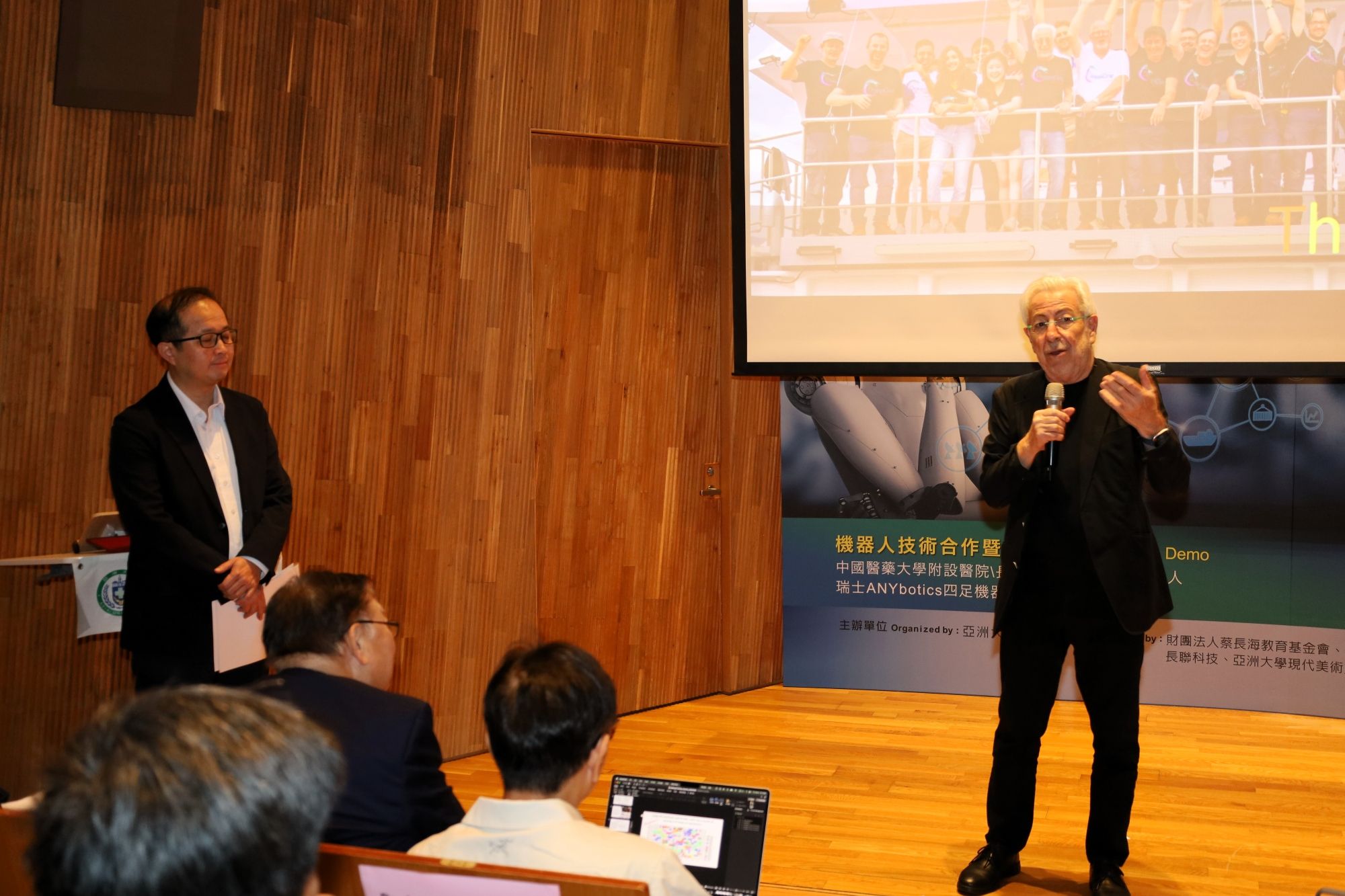
Oussama Khatib emphasizes that human–robot collaboration extends human expertise and judgment into high-risk environments such as the deep sea and disaster zones; pictured with Asia University Vice President Jung-Jie Huang (left).
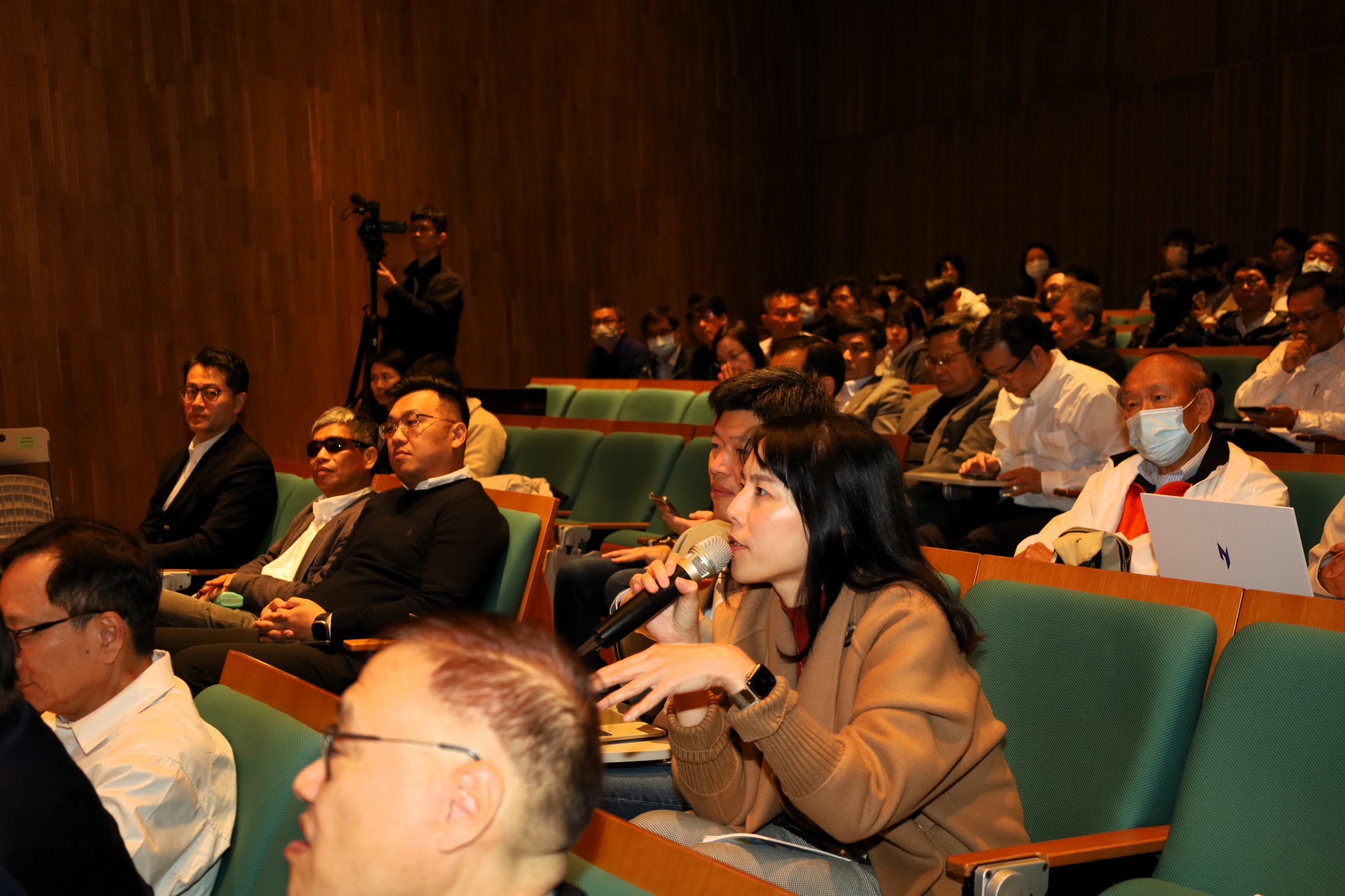
Asia University’s symposium on humanoid robotics and sovereign AI drew an enthusiastic response from participants.
Closing: From "Silicon Minds" to Real-World Impact
Asia University AI & Quantum Research Center Director Kuan-Tsae Huang concluded that for humanoid robots to become trustworthy partners in healthcare, manufacturing, and everyday services, progress must extend beyond hardware performance to include stronger data governance, system security, and cross-domain integration capabilities.
President Jeffrey J.P. Tsai added that the symposium not only showcased applications from hospitals to the deep sea, but also clarified technology boundaries and cybersecurity challenges through global dialogue. Asia University will continue serving as a platform connecting research, industrial deployment, and governance frameworks—helping humanoid robotics and sovereign AI advance in a safe, trustworthy, and socially aligned manner, and accelerating their transition into real-world benefits for society.
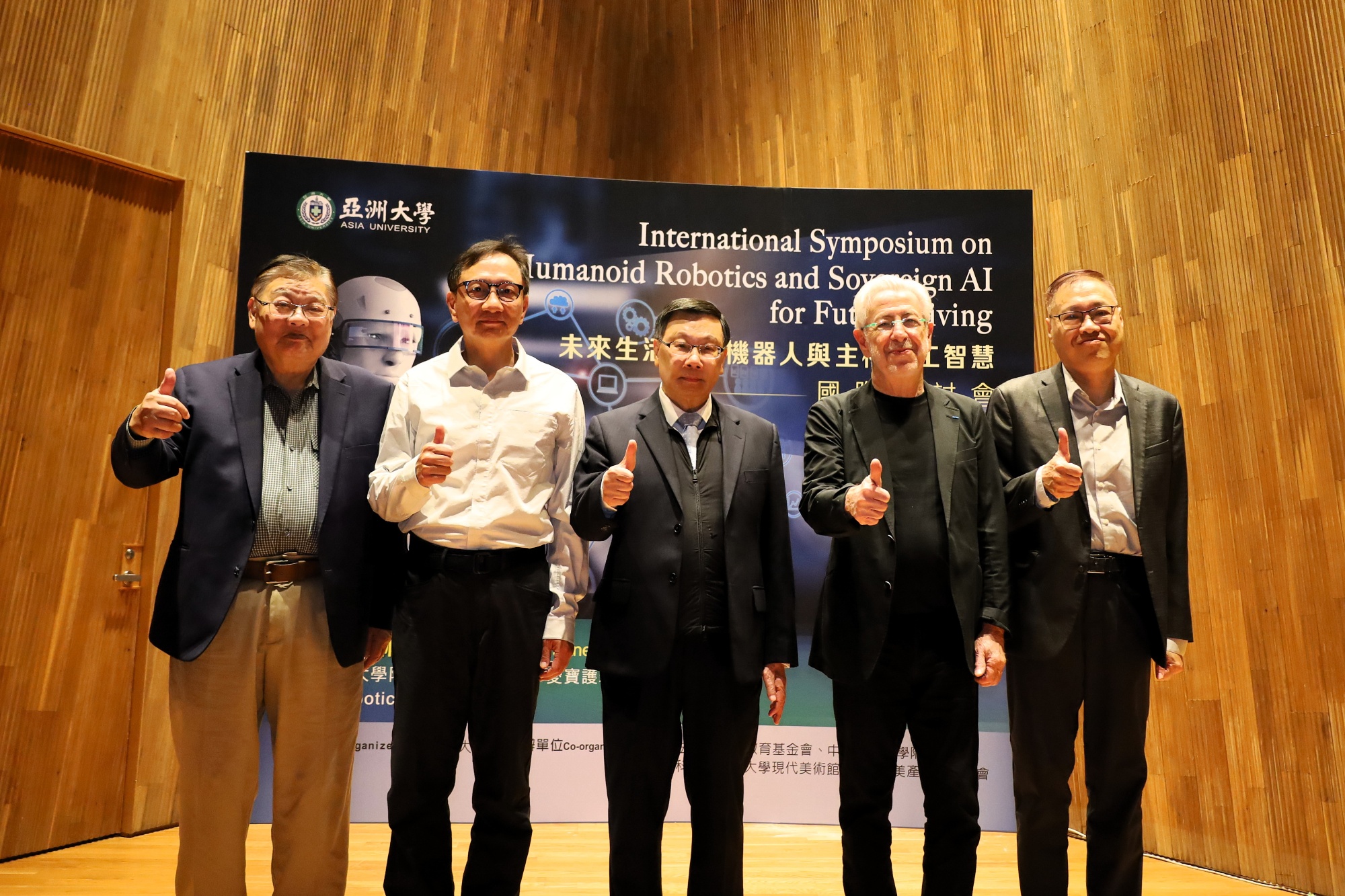
Scholars and industry representatives from Taiwan and abroad gathered at the International Symposium on Humanoid Robotics and Sovereign AI for Future Living.